
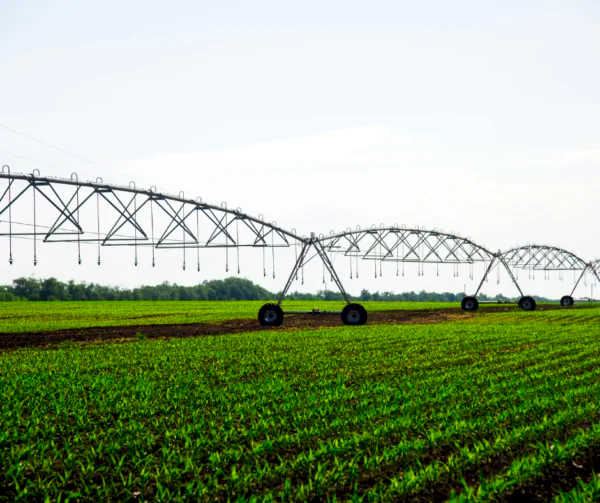
In competitive agricultural land markets, timing can make all the difference. A Reverse 1031 Exchange gives investors a strategic advantage by allowing them to acquire replacement property before selling their existing real estate while still deferring capital gains taxes under IRS Section 1031 rules. This approach can be especially valuable when high-quality farmland becomes available in regions such as Nebraska or Kansas, where desirable acreage may not stay on the market long. Rather than risk losing a prime property while waiting to sell another tract, investors can move quickly to secure the new land and complete the exchange afterward.
How a Reverse 1031 Exchange Works
A Reverse 1031 Exchange essentially flips the order of a traditional 1031 exchange. In a standard exchange, a property owner sells the relinquished property first and then purchases a replacement property within the required IRS timeline. In a reverse exchange, the replacement property is acquired first.
This “buy first, sell later” strategy can provide flexibility in fast-moving land markets where opportunities arise unexpectedly. For farmers, ranchers, and agricultural investors throughout the Midwest — including Nebraska and Kansas — this flexibility can make it possible to secure productive farmland, expand an operation, or reposition an investment portfolio without losing valuable tax-deferral benefits.
A 1031 exchange allows business or investment real estate to be exchanged for like-kind property while deferring capital gains taxes under IRS Section 1031 like-kind exchange rules. Agricultural land, pasture ground, and other farm or ranch properties typically qualify as like-kind real estate, which means they can often be exchanged for other agricultural properties across state lines. For example, a landowner might sell farmland in Kansas and reinvest the proceeds into irrigated ground in Nebraska, or vice versa, while still maintaining the tax-deferred treatment provided by Section 1031.
The Role of the Exchange Accommodation Titleholder (EAT)
Because IRS rules prohibit an investor from holding title to both the relinquished and replacement properties simultaneously during the exchange process, a third-party entity known as an Exchange Accommodation Titleholder (EAT) is used to temporarily hold title to one of the properties.
This arrangement is often referred to as “parking” the property. Depending on how the transaction is structured, the EAT may hold the replacement property until the relinquished property sells, or it may hold the relinquished property until the exchange is completed. This structure allows the Reverse 1031 Exchange to comply with IRS requirements while still giving the investor time to sell their original property.
Reverse 1031 Exchange Timeline and IRS Deadlines
Once the replacement property has been acquired in a Reverse 1031 Exchange, strict IRS timelines still apply. The taxpayer must identify the property they intend to sell within 45 days of acquiring the replacement property. After identification, the relinquished property must be sold within 180 days of the initial acquisition.
Meeting these deadlines is critical to maintaining the tax-deferred status of the transaction. Failing to meet the requirements can result in the exchange being disqualified and the capital gains becoming immediately taxable.
Why Reverse 1031 Exchanges Are More Complex
While a Reverse 1031 Exchange can provide valuable flexibility, it is generally more complex than a traditional exchange. These transactions often require upfront financing since the replacement property must typically be purchased before the relinquished property sells.
In addition, the transaction structure must comply with detailed IRS regulations governing reverse exchanges. This complexity means careful planning and coordination are essential, particularly when dealing with agricultural real estate transactions involving large tracts of farmland in Nebraska, Kansas, and across the Midwest.
Working With Experienced Reverse 1031 Exchange Professionals
Working with experienced professionals is key to successfully completing a Reverse 1031 Exchange. A qualified 1031 exchange intermediary helps structure the transaction and ensures that funds are handled according to IRS rules. In addition, tax advisors and real estate professionals familiar with agricultural property exchanges can help investors determine whether this strategy is the right fit.
Because farmland markets can vary significantly from region to region, local expertise can also play an important role in identifying opportunities and navigating the transaction process.
When properly structured, a Reverse 1031 Exchange allows investors to move decisively in competitive markets, secure high-quality land, and maintain the tax advantages provided by Section 1031. For agricultural investors looking to acquire farmland in Nebraska, Kansas, or throughout the Midwest, this strategy can provide the flexibility needed to act quickly without sacrificing long-term tax planning goals.
Taxpayers must report each like-kind exchange to the IRS using Form 8824, which calculates deferred gain and documents the details of the transaction. Because of the reporting requirements and transaction complexity, professional guidance is strongly recommended. See IRS Form 8824 instructions.
To find out more about Reverse 1031 Exchanges, call 866-995-8067, email us, or fill out our convenient web form to speak with an experienced land professional.